
English Sweep: Premier Leaking Chimney Repair Services In Ballwin, MOO
Ballwin, MO is a community where homeowners take pride in their properties, valuing maintenance and durability against the changing Midwest seasons. At English Sweep, we understand that a leaking chimney is more than just a nuisance… It’s a threat to the structural integrity of your home and the comfort of your living space. We specialize in diagnosing and resolving water intrusion issues that plague chimneys in our area. Whether your home is a classic ranch near Vlasis Park or a two-story traditional in a quiet cul-de-sac, our team brings extensive experience and a dedication to detail to every project. We focus on keeping your system drier and functioning as effectively as possible so you can enjoy your fireplace without the worry of hidden water damage.
What Early Warning Signs Show That a Leaking Chimney Is at Risk of Causing Interior Damage?
Water damage from a chimney leak is rarely an overnight phenomenon; it is usually a slow progression that gives off subtle warning signs before the ceiling collapses or mold takes over. Recognizing these early indicators can save Ballwin homeowners thousands of dollars in repairs to their attic, drywall, and flooring.
-
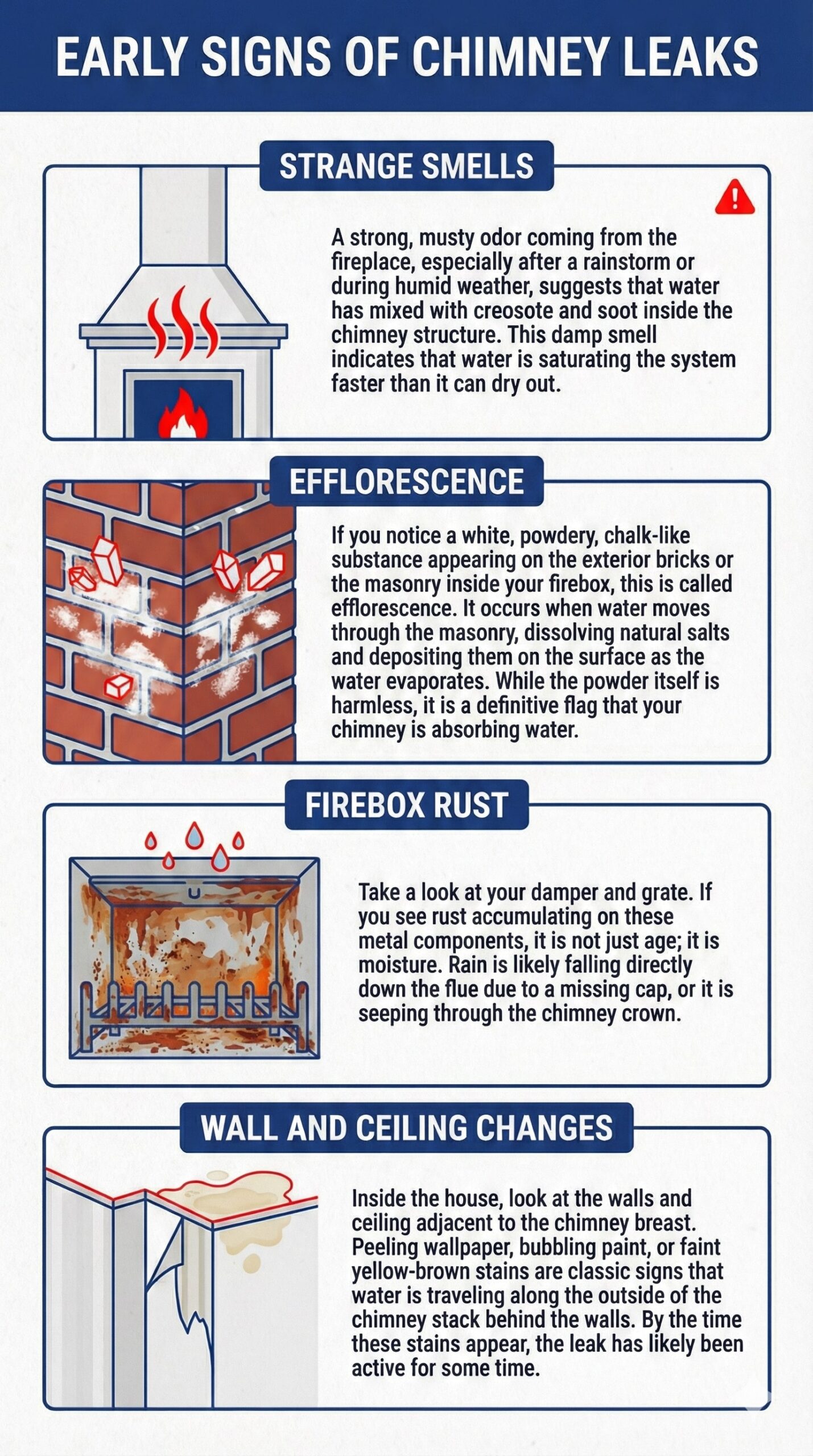
Olfactory Clues: Often, the first sign isn’t visual but olfactory. A strong, musty odor coming from the fireplace, especially after a rainstorm or during humid weather, suggests that water has mixed with creosote and soot inside the chimney structure. This damp smell indicates that water is saturating the system faster than it can dry out.
-
Efflorescence: If you notice a white, powdery, chalk-like substance appearing on the exterior bricks or the masonry inside your firebox, this is called efflorescence. It occurs when water moves through the masonry, dissolving natural salts and depositing them on the surface as the water evaporates. While the powder itself is harmless, it is a definitive flag that your chimney is absorbing water.
-
Firebox Rust: Take a look at your damper and grate. If you see rust accumulating on these metal components, it is not just age; it is moisture. Rain is likely falling directly down the flue due to a missing cap, or it is seeping through the chimney crown.
-
Wall and Ceiling Changes: Inside the house, look at the walls and ceiling adjacent to the chimney breast. Peeling wallpaper, bubbling paint, or faint yellow-brown stains are classic signs that water is traveling along the outside of the chimney stack behind the walls. By the time these stains appear, the leak has likely been active for some time.
If you spot any of these signs, it is vital to call English Sweep immediately. Catching a leak at the “smell” or “rust” stage is far less intrusive than repairing rotted framing or replacing drywall.
How Does a Chimney Professional Detect Microscopic Cracks in Liners & Masonry That Aren’t Visible to the Naked Eye?
Water intrusion often begins with defects that are impossible to see from the ground or even with a flashlight. Many homeowners assume that if the bricks look solid from the driveway, the chimney is watertight. However, moisture can bypass exterior defenses through hairline fractures in the chimney crown, the mortar joints, or the flue liner itself. At English Sweep, we utilize advanced diagnostic tools to uncover these hidden vulnerabilities before they turn into major structural failures.
We rely heavily on specialized chimney scanning technology. This involves lowering a camera system down the flue to capture high-resolution images of the interior masonry and liner. These cameras can rotate 360 degrees and zoom in on specific areas, allowing us to identify micro-cracks that might be smaller than a strand of human hair. These tiny fissures are significant because they allow moisture to penetrate the masonry from the inside, often leading to rapid deterioration during freeze-thaw cycles.
In addition to internal scanning, we perform detailed exterior assessments. We look for early signs of “crazing” on the chimney crown, which is a network of fine cracks that indicates the concrete is weathering. We also inspect the mortar joints for bond separation—where the mortar has pulled away from the brick just enough to let water in, even if the joint hasn’t fallen out yet. By identifying these microscopic entry points, we can apply targeted waterproofing sealants or recommend precise repairs like crown resurfacing. This proactive approach helps us stop leaks at the source rather than just patching the obvious damage.
Your Ballwin, MO Chimney Company: We Love This Beautiful Area
Ballwin, MO is frequently recognized as one of the best places to live in the country, and it is easy to see why. It offers a perfect blend of suburban tranquility and active community life. We love working in Ballwin because the neighborhoods are filled with character and the residents care deeply about preserving the quality of their homes.
The city is anchored by fantastic outdoor spaces like Vlasis Park and The Pointe at Ballwin Commons, where families gather for recreation and community events. Just a stone’s throw away, Castlewood State Park offers some of the best hiking and scenic views of the Meramec River in the region. Whether you are spending a day shopping along Manchester Road or enjoying a quiet evening in one of Ballwin’s leafy subdivisions, there is a strong sense of community here. At English Sweep, we are proud to contribute to this vibrant area by helping neighbors maintain safer, drier, and more beautiful homes.
Does Freeze/Thaw Weathering Accelerate Deterioration In Colder Climates? How Can Waterproofing Slow It Down?
In Ballwin and the greater St. Louis area, we experience a full range of seasons, including winters that fluctuate frequently above and below the freezing point. This specific weather pattern creates the perfect environment for freeze-thaw weathering, which is one of the most destructive forces acting on your masonry chimney.
How does the freeze/thaw cycle work? Bricks and mortar are naturally porous materials, acting somewhat like hard sponges. When it rains or snows, they absorb moisture. If the temperature drops below freezing while that moisture is trapped inside the masonry, the water expands by approximately nine percent. This expansion exerts tremendous internal pressure on the brick and mortar.
A single freeze might not cause visible damage, but repeated cycles over the course of a winter can cause the face of the bricks to pop off (spalling) or the mortar to crumble. Over time, this compromises the structural stability of the stack.
How does waterproofing help?
Professional waterproofing is the most effective defense against this cycle. Unlike standard sealers you might find at a hardware store, the products we use at English Sweep are vapor-permeable. This means they prevent liquid water from entering the brick from the outside while still allowing internal moisture (water vapor) to escape. This “breathability” is crucial because trapping water inside the brick with a non-breathable sealant would actually accelerate the freeze-thaw damage.
By applying a professional-grade water repellent, we create a barrier that beads water off the surface, keeping the masonry much drier. This significantly reduces the amount of water available to freeze and expand, thereby extending the lifespan of your chimney and reducing the need for expensive masonry rebuilds down the road.
How Do Chimneys Hold Up During Tornadoes or High-Wind Storms?
Midwest storms can be brutal, and Ballwin is no stranger to high winds and severe weather events. While chimneys are built to be sturdy, they are vertical structures that face the full brunt of wind loads, and storm damage often manifests as leaks that appear suddenly after a severe weather event.
- Wind-Driven Rain: One of the most common issues during a storm is rain being driven horizontally. Standard chimney caps are designed to stop rain falling vertically. However, during high winds, water can be forced into the flue from the side or driven into minor cracks in the masonry that would normally remain dry.
- Flashing Uplift: The metal flashing that seals the gap between your chimney and roof is particularly vulnerable during high winds. Strong gusts can lift the edges of the flashing or loosen the sealant. Once this seal is broken, water from the roof flows directly into the gap, often rotting the roof deck and attic insulation.
- Cap & Chase Cover Damage: Heavy winds can tear chimney caps right off their moorings or bend the metal chase covers found on prefabricated chimneys. If a branch strikes the chimney during a storm, it can crack the crown or dislodge bricks.
After any tornado warning or particularly violent storm, we recommend a visual inspection. We look for missing caps, debris on the roof near the chimney, and any fresh pieces of masonry on the ground. Even if the chimney didn’t collapse, the storm may have compromised its water-shedding ability, leaving it wide open to leaks during the next gentle rain.
What Happens If You Light a Fire When the Flue Is Still Damp After Heavy Rain?
Many homeowners might think that lighting a fire is a good way to “dry out” a damp chimney, but this can actually be dangerous and damaging to the system. Understanding the interaction between intense heat and saturated masonry helps explain why solving the leak should always come before lighting the match.
When bricks, mortar, or clay flue liners are saturated with rainwater, they hold a significant volume of moisture within their pores. If you build a hot fire, you are introducing a rapid and extreme temperature change. As the water inside the masonry heats up, it turns to steam. Water expands roughly 1,600 times in volume when it converts to steam. This rapid expansion creates immense internal pressure within the masonry materials.
This pressure can cause “spalling” from the inside out, where the face of the liner or brick blasts off. In severe cases, it can crack a clay flue tile completely. A cracked flue tile is a serious safety hazard because it allows heat and toxic gases to transfer to the combustible framing of the house. Furthermore, a damp chimney drafts poorly. You are likely to experience smoke rolling back into the room because the fire has to waste energy boiling off the water before it can establish a proper draft. The combination of water and soot also creates a highly acidic slurry that eats away at mortar joints. At English Sweep, we always advise repairing the source of the leak and allowing the system to dry naturally before returning to regular use.
Can Chimney Draft Be Affected by Nearby Construction or Trees Years After the House Was Built?
It is a common scenario: a homeowner has used their fireplace for twenty years without issue, and suddenly, they start experiencing smoking problems or signs of water entry that weren’t there before. Often, the cause is environmental changes surrounding the home rather than the chimney itself.
- Tree Growth: That sapling planted fifteen years ago is now a towering oak that overhangs the roofline. Large tree branches can disrupt the wind patterns across the roof, creating downdrafts that push smoke (and wind-blown rain) down the chimney. Additionally, overhanging branches drop leaves and debris that accumulate behind the chimney or in the gutters, creating dams that force water to back up and seep under the flashing.
- New Construction: If a neighbor builds a second-story addition or a new, taller home is constructed nearby, it can alter the air pressure zone around your house. This can reduce the draft, making the fireplace sluggish, but it can also change how wind hits your chimney, potentially driving rain into areas that were previously sheltered.
- Roof Replacements: Sometimes, a new roof installation can inadvertently cause chimney leaks. If the roofers did not properly integrate the new shingles with the existing chimney flashing – or if they reused old, rusted flashing – leaks are almost guaranteed.
We evaluate the entire environment when diagnosing chimney performance issues. If trees or nearby structures are causing downdrafts or water deflection issues, we might recommend installing a specialty chimney cap designed to mitigate wind issues or trimming back vegetation to protect the masonry from constant moisture exposure.
Trust Us for Leaky Chimney Repair Near You In Ballwin, MO
At English Sweep, we are committed to keeping Ballwin homes drier and more comfortable. We know that a leaking chimney is a stressful problem, but our experienced team has the tools and knowledge to fix it correctly. From waterproofing and flashing repair to crown rebuilds and cap installations, we offer comprehensive leak repair solutions tailored to your specific needs.
Don’t let a small leak turn into a major renovation project. Call English Sweep today to schedule your inspection and protect your home from water damage.